
sreejithsreedharan
Well-Known Member
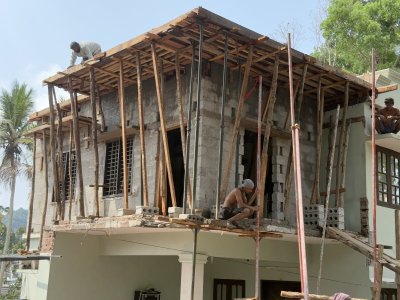 Finally started the build for my dedicated listening room. Concrete work was completed yesterday. The room is coming up in the front balcony area, so I’ll need to incorporate windows for aesthetic reasons.
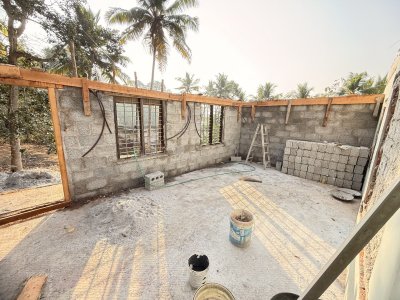

 Finally started the build for my dedicated listening room. Concrete work was completed yesterday. The room is coming up in the front balcony area, so I’ll need to incorporate windows for aesthetic reasons.
That is one nice sized room SreejithView attachment 95314Finally started the build for my dedicated listening room. Concrete work was completed yesterday. The room is coming up in the front balcony area, so I’ll need to incorporate windows for aesthetic reasons.View attachment 95312View attachment 95313
 . You will probably never fall short of space there

 www.kissyourears.com
Thanks for the suggestion.I recall reading somewhere that non parallel walls help with better acoustical properties.
Maybe a bit too late to consider this but it’s possible to do this to an extent while plastering?
I did come across this:
Should I Build Non-Parallel Walls in My Studio?
Short Answer: No — and here’s why. There’s a long-standing myth in acoustics: If you build your studio with slanted walls, you’ll eliminate room modes. Let’s be clear — that’s not how sound works. Yes, non-parallel walls can influence the acoustic behavior of a space. But they don’t make modes...
Given that acoustic properties of a listening room is considered the one of most important factor that impacts the reproduction of playback sound this is an exciting project. Please share regular updates on your design choices and progress.
This might be of some use:
Acoustic plaster - Wikipedia
en.wikipedia.org
I am definitely not an expert in room acoustics. But my understanding is that all the surfaces (including floor and ceiling) in the room reflect sound. How they reflect and how much they do, matters. Most people who are serious about this measure their room acoustics specially resonances and then add room treatment panels to absorb and or diffuse the problem frequencies.Thanks for the suggestion.
Just one doubt I have — if the walls are non-parallel, won’t the reflected sound from the speakers reach our ears at slightly different timings? Would that affect imaging or the overall soundstage in a negative way? Or is the benefit mainly in reducing room modes?
At this stage, unfortunately, it’s not practically possible to create non-parallel walls since the room is coming up in the front balcony area and the structure is already defined.
Regarding acoustic plaster, that’s an interesting thought — I’ll check with the contractor to see if that’s feasible and what options are available locally.
Really appreciate the inputs. I’ll definitely keep sharing updates as the build progresses.
Thanks
 www.bang-olufsen.com

 www.acousticsciences.com
You have made a great start for a nice sounding room for your music.Thanks a lot for the detailed input. Really appreciate you taking the time.
You’re absolutely right — all surfaces (walls, floor, ceiling, glass) will reflect sound, and how they reflect + how much they reflect will define the character of the room. I’m definitely not an expert in room acoustics, but I fully agree that treatment should not be an afterthought in a dedicated listening room.
Before starting this build, we did some basic RT60 measurements and the average RT60 was around 0.65–0.75 seconds, with noticeable decay inconsistencies in the low frequencies. The room feels lively, but bass control and mid clarity can definitely improve. Ideally, for a dedicated listening room of this size, I’m targeting something in the 0.35–0.45 second range, with smoother decay across the spectrum.
The new room dimensions are already finalized structurally (since it’s coming up in the front balcony area), so major structural acoustic shaping like non-parallel walls isn’t possible at this stage. But acoustics is very much part of the initial plan — not something I want to fix later in panic mode.
Initial plan:
• Maintain proper speaker-listening position ratio (likely around 38% rule to start with)
• Thick curtains for window control (since windows are unavoidable)
• Large area rug between speakers and listening position
• Dedicated ceiling treatment — considering acoustic panels or at least partial cloud treatment
• Bass traps in corners (especially front wall corners)
• First reflection point panels on side walls
Regarding acoustic plaster — I need to check with the contractor about feasibility and availability locally. Ceiling treatment is definitely easier to plan now rather than after finishing.
My goal is not to over-deaden the room but to control early reflections and room modes while keeping it natural and musical. Since I mostly listen at moderate levels (~70–75 dB), I want clarity, imaging precision, and tight bass rather than sheer loudness.
This is an exciting phase for me — and I truly value these inputs. I’ll keep sharing measurements and progress as things move forward.
Thanks Analogus- but we don't have IKEA here in Kerala- Thiruvananthapuram.IKEA sells acoustic panels in their Mitzon range
Check IKEA India website to see if they deliver to Thiruvananthapuram.Thanks Analogus- but we don't have IKEA here in Kerala- Thiruvananthapuram.
Thanks a lot for taking the time to check and share this. I really appreciate the effort.That’s disappointing.
In Europe IKEA is also selling acoustic panels as moveable floor standing units. Great for those living in rental apartments etc. But this is not offered in IKEA India

 darko.audio

If you can build bass traps with Rockwool and then cover it with think cloth, ceiling to floor, that matters the most for bass control. If you are really serious about audio - instead of using the space between the speakers for a tv, use it to have a thick acoustic panel, in terms of imaging, it works wonder. For me, a glass panel tv - worse when it’s big diffuses the image, unless you pull the speakers too far into the room.Thanks a lot for taking the time to check and share this. I really appreciate the effort.
Meanwhile, I’m planning to get some absorption panels made locally from a manufacturer here. Since the room is still in the setup stage, I think this will give me some flexibility to tailor the panels according to the room dimensions and the RT60 measurements we took earlier. Hopefully that should help in controlling reflections and improving the overall acoustics.
Thanks for the suggestion, really appreciate it. Bass traps using Rockwool from floor to ceiling is definitely on my radar as bass control will be important in this room.If you can build bass traps with Rockwool and then cover it with think cloth, ceiling to floor, that matters the most for bass control. If you are really serious about audio - instead of using the space between the speakers for a tv, use it to have a thick acoustic panel, in terms of imaging, it works wonder. For me, a glass panel tv - worse when it’s big diffuses the image, unless you pull the speakers too far into the room.

 musiccityacoustics.com

 www.gikacoustics.com
 musiccityacoustics.com


