Room equalization and correction in the source content playing on Ubuntu Linux laptop 💻

rwnano

Well-Known Member
Joined
Jul 21, 2022
Messages
1,048
Points
113
Location
Gurugram, Haryana, India
Wanted to run REW calibration on my Ubuntu Linux laptop.
My chain is:

Ubuntu Linux laptop running Spotify gui.
Output to a topping d10s DAC
RCA cable output to a harman kardon AVR receiver 3550
Output to stereo speakers and 1 subwoofer.

Wanted to run REW calibration in my room.

How to run it on my Ubuntu Linux laptop?
I'll have to buy a mike?
Thank you
 
Wanted to run REW calibration on my Ubuntu Linux laptop.
My chain is:

Ubuntu Linux laptop running Spotify gui.
Output to a topping d10s DAC
RCA cable output to a harman kardon AVR receiver 3550
Output to stereo speakers and 1 subwoofer.

Wanted to run REW calibration in my room.

How to run it on my Ubuntu Linux laptop?
I'll have to buy a mike?
Thank you
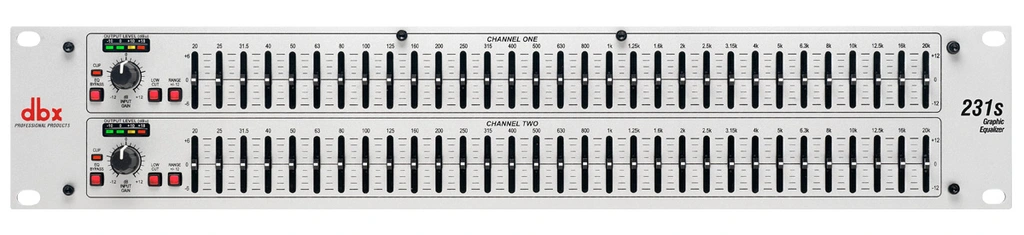
I have not tried REW as I'm a contended geezer and there are more important problems to solve. I simply use a dual 31 band equalizer below to tune my audio as per my liking. The below graphic equalizer has both balanced and single ended inputs/outputs and my D10b dac's output is connected to it. The balanced output goes to my amp that has balanced inputs. The SE output goes to 4 of my headphone amps (switchable).
1760813982824.png
But AFAIK this is what is involved

1. Have a calibrated microphone. You can get a mic like minidsp's UMIK-1 for which REQ already has the calibration data or calibrate any other microphone using a standard microphone like UMIK-1

2. Run the REQ wizard which will measure your room response in put it in a format that is understood by various software what works in conjuction with some hardware like miniDSP. The mic needs to be mounted on a standard camera tripod at the MLP. The hardware will then use DSP to alter your audio output to correct anomalies in your room response.

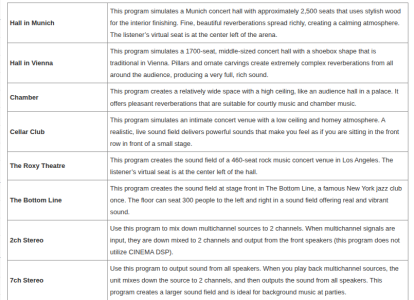
So apart from installing REQ software you require the microphone and a hardware like minidsp. Maybe some amps and AVRs have ability to load the REQ generated data (which I don't know). Another reason for me never trying REQ is that my AVR comes with a Yamaha Parametric room Acoustic Optimizer. Just connect a mic and run the YPAO program and my AVR does a pretty good job in measuring the room response and applying optimization to the output. Along with the height speakers in addition to 7.2, the effect is so good that I actually feel that I'm in a concert hall and I have the choice of selecting the concert halls as below (my favourite being Cellar Club). All done by simply clicking a button on the AVR remote.

1760814983629.png
 
Last edited:
Yes the problem is that my harman kardon AVR receivers may have room equalization but I am not able to access it using the remote control since the receiver lacks HDMI
 
Wanted to run REW calibration on my Ubuntu Linux laptop.
My chain is:

Ubuntu Linux laptop running Spotify gui.
Output to a topping d10s DAC
RCA cable output to a harman kardon AVR receiver 3550
Output to stereo speakers and 1 subwoofer.

Wanted to run REW calibration in my room.

How to run it on my Ubuntu Linux laptop?
I'll have to buy a mike?
Thank you
Do you want to know the precise steps to run on REW in order to get room frequency & time response?
I have been running REW with laptop's own microphone and results are not unsatisfactory. Buy a calibrated measurement microphone as a later step if you find the current equipment unworthy.

my AVR comes with a Yamaha Parametric room Acoustic Optimizer. Just connect a mic and run the YPAO program and my AVR does a pretty good job in measuring the room response and applying optimization to the output. Along with the height speakers in addition to 7.2, the effect is so good that I actually feel that I'm in a concert hall and I have the choice of selecting the concert halls as below (my favourite being Cellar Club). All done by simply clicking a button on the AVR remote.
But why should that sound good? You are adding room (concert hall) impulse on top of the recorded room impulse (the recording as intended by the producer). In my uninformed opinion (since I haven't listened to your system), it would sound more than usual reverby.
 
But why should that sound good? You are adding room (concert hall) impulse on top of the recorded room impulse (the recording as intended by the producer). In my uninformed opinion (since I haven't listened to your system), it would sound more than usual reverby.
There is absolutely no reverb and DSP is used to achieve this. The Yamaha YPAO calibration sets the appropriate delay for the surround speakers. The sound stage gets expanded along with the height of the sound stage. Yamaha sound programs are pre-configured audio settings (often called DSP programs) found in their AV receivers and soundbars that adjust the sound field for different types of content.

This is a quote by another user from avsforum and it pretty much reflects what I feel

I have a Yamaha Aventage3800. I have had other Yamahas for which I had presence or height speakers as well. Their DSP is very good for the right source material. For me that is classical music. It really does sound like chamber music performed in a church or an orchestra in a famous hall. But for pop, rock, etc? Yuck. Most people hate it because it does not focus vocals on the center channel like Atmos, and gives echo effects that most people don’t like. I do not use any enhanced modes for movies, either - 11 channel Atmos is fine for me. And now many of my favorite classical albums are being remixed in Atmos - and I have compared the Atmos to the processed stereo tracks. It turns out that for the appropriate sound space selection and classical music, Yamaha’s decades-old technology is almost identical.
 
But why should that sound good? You are adding room (concert hall) impulse on top of the recorded room impulse (the recording as intended by the producer). In my uninformed opinion (since I haven't listened to your system), it would sound more than usual reverby.
What I forgot to menttion is that the room acoustic is taken into account. The calibration uses a mic known as YPAO microphone. After the calibration, the avr draws a 3d picture of all the speakers with the distances between them and the MLP. The reverb is only felt in 'Hall in Vienna', 'Hall in Munich' and 'Chamber' DSP sound programs because these venues actually have reverb present naturally. The YPAO DSP program also allows you to to manually adjust distance or delay for the speakers, after the automatic calibration is done. The DSP program is handled by Yamaha's proprietary chip known as Cinema DSP chip.
 
@mbhangui , I pretty much guessed that it would work fine for music that is designed for heavy reverb listening (classical); however, produced music like pop, rock, jazz, blues etc would sound meh - in fact this reminds me decades ago when creative and m-audio PCI slot soundcards used to come, the software driver had settings where one could change the "ambience" to hall, church, open field etc.
 
Purchase the NEW Audiolab 6000A MkII Integrated Amplifier at a special offer price.
Back
Top