

The psychological drivers of misinformation belief and its resistance to correction
The psychological drivers of misinformation belief and its resistance to correction - Nature Reviews Psychology
Misinformation is influential despite unprecedented access to high-quality, factual information. In this Review, Ecker et al. describe the cognitive, social and affective factors that drive sustained belief in misinformation, synthesize the evidence for interventions to reduce its effects and...
 www.nature.com
Unfortunately the full article is behind a paywall, but here is the abstract
Misinformation has been identified as a major contributor to various contentious contemporary events ranging from elections and referenda to the response to the COVID-19 pandemic. Not only can belief in misinformation lead to poor judgements and decision-making, it also exerts a lingering influence on people’s reasoning after it has been corrected — an effect known as the continued influence effect. In this Review, we describe the cognitive, social and affective factors that lead people to form or endorse misinformed views, and the psychological barriers to knowledge revision after misinformation has been corrected, including theories of continued influence. We discuss the effectiveness of both pre-emptive (‘prebunking’) and reactive (‘debunking’) interventions to reduce the effects of misinformation, as well as implications for information consumers and practitioners in various areas including journalism, public health, policymaking and education.
Explanation of the Abstract
- Misinformation is defined as any information that is false, and it presents a significant challenge for how people think and interact socially. This issue arises because people can make mistakes or intentionally lie [1].
- The rise of misinformation is not solely due to human error; it is also influenced by technology. For example, throughout history, misinformation has been used in various ways, such as by Roman emperors and during the Nazi regime, to manipulate public opinion [1].
- Today, the internet allows misinformation to spread rapidly and widely, reaching billions of people. It enables the creation of tailored messages that can reinforce existing beliefs, leading to what are known as "echo chambers" where people only encounter information that aligns with their views [1].
- While there is debate about the impact of echo chambers, it is clear that the internet facilitates the quick spread of false information, often overshadowing accurate facts. Traditional methods to combat misinformation, like simply providing correct information, have not been very effective [2].
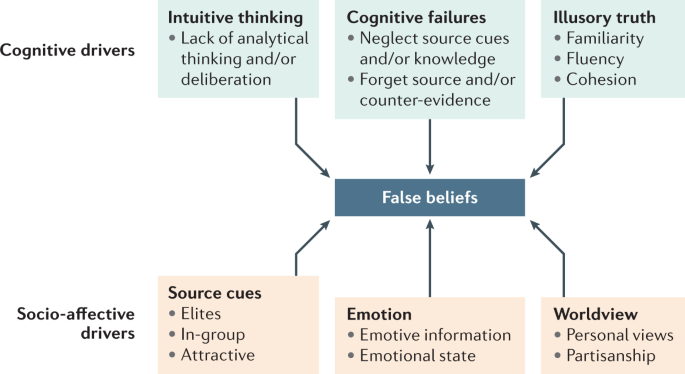
- The paper argues that understanding misinformation requires looking beyond just the facts. It highlights that people's beliefs are influenced by cognitive, social, and emotional factors. For instance, some individuals may reject scientific consensus on issues like climate change or vaccinations, not because they lack information, but due to personal beliefs and values [2].
- The authors emphasize the need for a comprehensive approach to counter misinformation. This includes educational strategies, pre-emptive measures, and the use of technology to help people recognize and resist false information. They also discuss the broader societal trends that contribute to the spread of misinformation and its implications for journalism, education, and policy-making [2].
Last edited:


