Any good references for calculation of Speaker & Amplifier current / Voltage / Power matching ?

I can explain it to you , but before that , I just want to know, if you have engineering background or studied maths physics in 12th sci. (it will be lot easier compared to those who have studied in other streams) As this involves lots of sine wave calculations.
 
As @availlyrics said. This basically works with the basics of Ohm's law.

V = I × R
P = V × I = V² / R = I² × R


Just assume, like, your amplifier is 30V and (4 Ohm speakers)

CURRENT - I = V / R = 30 / 4 = 7.5 A
POWER - P = V² / R = 900 / 4 = 225 W

From this formula you calculate 8 ohm or 2 ohm speakers.
for example

2 ohm
CURRENT - I = V / R = 30 / 2 = 15 A
POWER - P = V² / R = 900 / 2 = 450W

8 ohm

CURRENT - I = V / R = 30 / 8 = 3.75 A
POWER - P = V² / R = 900 / 8 = 112.5 W
 
I can explain it to you , but before that , I just want to know, if you have engineering background or studied maths physics in 12th sci. (it will be lot easier compared to those who have studied in other streams) As this involves lots of sine wave calculations.
B.Tech IIT, masters in engineering from the USA.
In material science 🔭 🧪 and not in electronics and electrical engineering
 
My amplifier is harman kardon AVR 240 amplifier. Link below to the manual.
Now what specs 🤔 do I pick up from the manual?
Thank you for your kindness in responding 🙏
Source: Harman Kardon https://share.google/v4ar9cMrTm3whKfSQ
If the specs are met in actual testing, it all matters- most of the time the manual or the spec sheet has false numbers. In a test bench half of the avrs on market fail to meet their claimed specs
 
As @availlyrics said. This basically works with the basics of Ohm's law.

V = I × R
P = V × I = V² / R = I² × R


Just assume, like, your amplifier is 30V and (4 Ohm speakers)

CURRENT - I = V / R = 30 / 4 = 7.5 A
POWER - P = V² / R = 900 / 4 = 225 W

From this formula you calculate 8 ohm or 2 ohm speakers.
for example

2 ohm
CURRENT - I = V / R = 30 / 2 = 15 A
POWER - P = V² / R = 900 / 2 = 450W

8 ohm

CURRENT - I = V / R = 30 / 8 = 3.75 A
POWER - P = V² / R = 900 / 8 = 112.5 W
This is only true if a speaker is purely resistive. However most speakers are reactive loads.
 
If the specs are met in actual testing, it all matters- most of the time the manual or the spec sheet has false numbers. In a test bench half of the avrs on market fail to meet their claimed specs
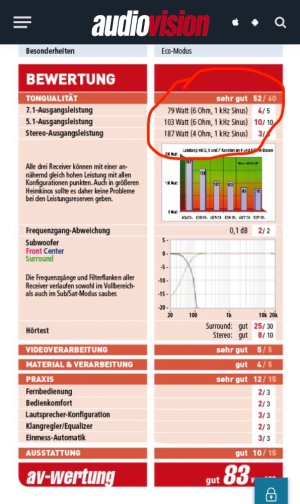
For example the Denon AVR i have(x3300) has the following measured performance - on running 2 channel its 187w into 4 ohms. In 8 ohms it must be half so 93,5w before clipping. If we look at Denon’s manual : the specs say:


Rated output:Front:
105 W + 105 W (8 Ω/ohms, 20 Hz – 20 kHz with 0.08 % T.H.D.)
Not bad imo, but specs are not true either. It gets complicated when the current output is high most manufacturers do not specify this.
 

Attachments

  • IMG_0568.jpeg
    IMG_0568.jpeg
    182.3 KB · Views: 2
Lets go step by step thru the specs-
Audio SectionStereo ModeContinuous Average Power (FTC)65 Watts per channel, 20Hz–20kHz,@ <0.07% THD, both channels driven into 8 ohms
Six-Channel Surround ModesPower per Individual ChannelFront L&R channels:50 Watts per channel@ <0.07% THD, 20Hz–20kHz into 8 ohms
Center channel:50 Watts @ <0.07% THD, 20Hz–20kHz into 8 ohmsSurround
(L & R Side, Back) channels:50 Watts per channel@ <0.07% THD, 20Hz–20kHz into 8 ohms
Input Sensitivity/ImpedanceLinear (High-Level) 200mV/47k ohms
Signal-to-Noise Ratio (IHF-A) 100dB
Surround System Adjacent Channel SeparationPro Logic 40dBDolby Digital 55dBDTS 55dBFrequency Response@ 1W (+0dB, –3dB) 10Hz –130kHz
High InstantaneousCurrent Capability (HCC) ±35 Amps
Transient IntermodulationDistortion (TIM) Unmeasurable
Slew Rate 40V/µsec
 
Audio SectionStereo ModeContinuous Average Power (FTC)65 Watts per channel, 20Hz–20kHz,@ <0.07%
You must have heard amp/spk power specs ratings mentioned as "RMS Watts", that is a wrong term. No such term exists in electrical eng. books
The correct term is "Average Watts" or just "Watts".
Now, your AVR can provide 65 Average Watts of Continuous Power into a 8 Ohm resistive load. Speakers , crossovers exhibit wild impedance curve
20Hz–20kHz , listener's hearing range depends upon his/her age and other factors while typical recordings rarely exceed this range. Exception - Live music is a totally different ball-game.
@ <0.07%. (Anything less than 0.1% is good enough).
Many critical data in the tech specs. is missing, but it is what it is
 
Last edited:
Yes, I wanted to keep things simple; that's why I didn't specify it. We actually need a resistive dummy load of 8, 4, or 2 ohms for accurate testing.
In the real world, we should trust our ears, and basic knowledge suffices. Delving deeper may complicate matters, but while it can be beneficial, it will also make things much more complex.

Your AVR240 delivers 60-65 W RMS in stereo mode. Now, let's discuss speakers. What type of speaker are you using? We need to consider speaker impedance, but it's also important to discuss speaker sensitivity at the same time; only then does it make sense.

For instance, if you have 8 ohm-89 dB speakers connected to your AVR and you set the listening volume to 25, you'll experience room-filling sound. Conversely, if you switch to 2 ohm speakers, they will require more power to achieve the same volume. This means you would need to raise the volume to 50, which forces the amplifier to provide more power to the speakers, potentially leading to stress on the amplifier, heating issues, clipping, and so on.

Now, let's consider another scenario.

If you are using 8-ohm, 100 dB speakers with your AVR and your listening volume is set to 10, you will still get room-filling audio, but you'll only need half the power to make that speaker louder.

However, if you use a 65W AVR with 100dB speakers, instead of music, you might hear hissing or white noise (which is a topic for another discussion).

Cheers.
vishnu

 
How much peak Power?
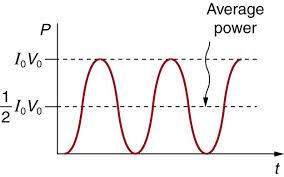
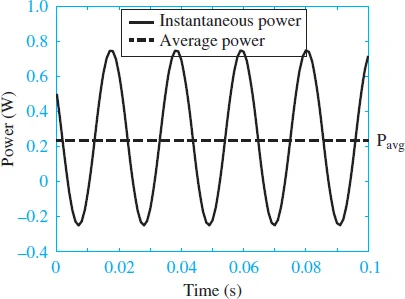
Peak Power = Average Power X 2 = 65 X 2 = 130W (into 8 Ohms) per ch.

For an ideal amplifier (not your HK AVR) , The Peak Power = 260W (into 4 Ohms) or 520W (into 2 Ohms ) per ch .
No point in calculating beyond this , as we may enter into the notorious PMPO zone
 
Last edited:
if a speaker is 4 Ohms then - how much current will it require?
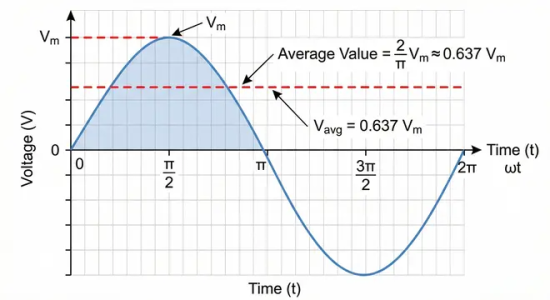
Pavg (W) = Irms X Irms X R
65W = Irms X Irms X 8

Irms = 2.8504A in a 8 Ohms load (or 4.0311A of RMS current in a 4 Ohms load)
Ipeak = 4.0311A in a 8 Ohms load (or 8.0622A of peak current in a 4 Ohms load)

Output devices in any weak amplifier (incl. your HK AVR) may run into serious trouble due to Safe Operating Area limitations
Expert FMs, Please do correct me if I have calculated anything wrong
1774616012189.png
1774616164554.png

1774615936550.png
 
Last edited:
Pavg (W) = Irms X Irms X R
65W = Irms X Irms X 8

Irms = 2.8504A in a 8 Ohms load (or 4.0311A of RMS current in a 4 Ohms load)
Ipeak = 4.0311A in a 8 Ohms load (or 8.0622A of peak current in a 4 Ohms load)

Output devices in any weak amplifier (incl. your HK AVR) may run into serious trouble due to Safe Operating Area limitations
Expert FMs, Please do correct me if I have calculated anything wrong
View attachment 95788
View attachment 95789

View attachment 95787
However, peak current capacity of the Harman kardon AVR amplifier 240 is written to be 35 amperes. +-. If you check the specifications. Peak power and peak current capacity philosophy of the Harman kardon brand is well known. The weight of the amplifier is 15 kg with a fat transformer inside. This means that even if the speakers are a electrostatic speaker going down to 1.5 ohm's, I have reason to believe that the Harman kardon AVR 240 can handle the same...as per the grapevine.
 
Please 🙏 address this peak current capacity of 35 amperes in the Harman kardon AVR?
The maximum current your AVR can manage is 35A, which means it can handle up to 35 amperes. If it exceeds this limit, your AVR may get damaged. The current usage depends on the connected load. However, your AVR, like any other AVR, can operate at its peak amp or peak RMS for a very short time. For instance, if your AVR has a continuous power of 65W and a peak RMS of 110W, it can function at 110W for a fraction of a second before returning to 65W. Therefore, focus on continuous current draws rather than peak current.
 
Purchase the NEW Audiolab 6000A MkII Integrated Amplifier at a special offer price.
Back
Top