Any good references for calculation of Speaker & Amplifier current / Voltage / Power matching ?

1.8ohms is not speaker impedance, the lowest the article claims is 2.84 ohms. The manufacturer claims 6 ohms impedance and then claims 23Hz porting at 3.5ohms and measurement says 2.84 ohms. Nothing is matching. One thing is for sure, the specs dont seem correct. Nothing new.

If you see the entire graph stays well above Re, probably they used 2.84ohm woofer and claimed 6 ohms impedance, I would interpret this way. They certainly know what they are doing, only its not evident to us. Its not correct to call this speaker as 6 ohms, most amplifiers will struggle at 23Hz with this speaker. Its 2.84ohm speaker to me.

EPDR is what matters not the raw impedance since every device will have a different phase angle and a more negative phase angle reduces the effective impedance seen by the amp.
 
Just ignore there tall claims, majority of AVRs can hardly support even a 4 Ohms load.
You are factually incorrect here.
I an using my DENON AVR-1604 as a subwoofer amplifier with a 2 ohm load without any issues past 3+ years. They are connected to 2 x 12", 4 ohms woofer in a push-pull arrangement in an H-frame open baffle.
When i connect them as a 8 ohm load the bass is very thin and not powerful. The 2 ohm load gives excellent bass and punch which i enjoy a lot.
 
Driving a 2-ohm speaker with a 4 or 6-ohm stable amplifier is risky and likely to cause overheating, distortion, or permanent damage to the amplifier due to excess current draw. While it might work at low volumes, the output stage of the amp will struggle to maintain proper output voltage, overheat , the amp's output impedance will limit current or likely enter into the "protect mode". of
Its like a driving a 2-wheeler. like a scooty (unless its an old school Bullet) with more than two riders. Yes, it will run, but the engine would be over heating , control , steep climb & acceleration would be severely limited, the suspension would sag and so on.
 
Last edited:
I have shared some calculations. I hope it will be useful for some.

Simplified definitions:
- Prms is output voltage x output current when amplifier output is a single frequency. Say: 1kHz.
- Pave, as applied to audio application, is ave of output voltages of different frequencies and different amplitudes x ave of output currents of different frequencies and different amplitudes
- Peak power is a measure of an amplifier to handle very large power for a very very small amount of time or an instance of time.
- Kindly note that considerations such as crest factor of 3 used for audio application, signal processing such as compression can skew the interpretation of calculations or the definitions
 

Attachments

Prms is output voltage x output current when amplifier output is a single frequency. Say: 1kHz.

RMS Power vs. Average Power​

Question:​

Should I use units of root mean square (rms) power to specify or describe the ac power associated with my signal, system, or device?

Answer:​

It depends on how you define rms power.

You do not want to calculate the rms value of the ac power waveform. This produces a result that is not physically meaningful.

You do use the rms values of voltage and/or current to calculate average power, which does produce meaningful results.
 
Pave, as applied to audio application, is ave of output voltages of different frequencies and different amplitudes x ave of output currents of different frequencies and different amplitudes
Within its specs limits, it doesn't matter to an amplifier, whether the input signal is a complex musical piece or a sine wave test signal
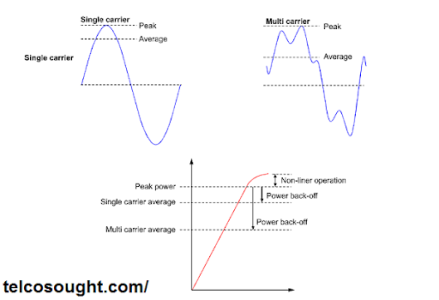
The average power (Pavg) of a sine wave is the time-averaged value of instantaneous power over one full cycle. It represents the constant DC component of AC power, often termed active or real power. For a purely sinusoidal load, it equals half the maximum or peak power
 
Peak power is a measure of an amplifier to handle very large power for a very very small amount of time or an instance of time.

For a pure sine wave, the Average Power is exactly half of the Peak Power
Attch shows Sine wave vs music signal, pls note that the value of average power is closer to peak power in a sine wave .
That's why during sine wave testing , volume should be kept low

1776859794361.png
 
Last edited:
Purchase the NEW Audiolab 6000A MkII Integrated Amplifier at a special offer price.
Back
Top