
Batery powered DIY CNC phono stage

Thanks @Bloom@83 for CNC phono review. But let us know your gadgets TT, AMP etc in the chain. Do you use the CNC with battery? And if CNC sounds better than Schiit Mani ?
Hi

My turntable is the Project Debut Carbon DC with Ortofon 2M Red cart(which I’ll soon upgrade to Blue ). Also a custom cork mat from @rikhav .

Speakers are Elac Debut B6. No need to describe it as it has created a revolution in the speaker industry. :)

Amp I already mentioned- PM5005 Marantz. Cables and ICs from DAC.

Yes , it is better than Schiit Mani. Better defined bass and midrange. Mani has other advantages like easy gain changes but SQ wise CNC trumps it. It has a power adapter provided , not battery that was used earlier.
 
Hi

My turntable is the Project Debut Carbon DC with Ortofon 2M Red cart(which I’ll soon upgrade to Blue ). Also a custom cork mat from @rikhav .

Speakers are Elac Debut B6. No need to describe it as it has created a revolution in the speaker industry. :)

Amp I already mentioned- PM5005 Marantz. Cables and ICs from DAC.

Yes , it is better than Schiit Mani. Better defined bass and midrange. Mani has other advantages like easy gain changes but SQ wise CNC trumps it. It has a power adapter provided , not battery that was used earlier.
Thanks for mentioning the equipments you are using. Unfortunately, I am not getting the kind of output from CNC phono for which I thought to take your valuable reviews. Also if you dont mind I will suggest you to consider a more powerful amp for the speaker.
 
Thanks for mentioning the equipments you are using. Unfortunately, I am not getting the kind of output from CNC phono for which I thought to take your valuable reviews. Also if you dont mind I will suggest you to consider a more powerful amp for the speaker.
Yes upgrading the amp is already in my near future plan. Not sure why you aren’t getting similar satisfactory output from CNC phono. Because I also know someone with quite high end gear (Technics 1200 mk2 , Bowers and Wilkins BS , custom built tube preamp costing close to 45K ) who has both the Mani and the CNC phono but uses only the CNC.
 
The 3 biggest (and most relevant) variables in any home audition are (1) the listening tastes of the user, (2) the chain of gear and (3) what is played for the audition - quality of recording and even genre of music. Keeping these 3 factors in mind, we can only take a review of gear performance as a guideline and a reference point, and not the conclusion. I have used a lot of NAD amps with terrific phono-stages including the famed NAD 1000, the NAD 106 and the globally acclaimed NAD 3020 and 1020A. I found my versions of the CNC to perform better (and i made some really maveric versions :) which nobody will actually even attempt). However I was quick to realize that I was biased as (1) I built them and (2) my management brains were looking at things from a value/rupee spent perspective :). So one day while listening to a record with my wife around, on the CNC, I asked her what she thought about the sound. She said it sounded dull. To please her (and this is considered a blasphemous tactic in the audiophile phonostage world) I simply turned all the individual switches on the dip-switch to off-mode (thereby disconnecting all the input load balancing resistors) and the whole thing brightened up. My CNC phonostage stayed that way for as long as I had it and all who used to visit said it sounded harsh. However my wife and I loved the bright sound, especially when listening to country music and AOR.
 
Last edited:
Another one completed today. Enclosure provided by Nishant
YSHsqs1.jpg

J3jOWoi.jpg

Qsg9RKT.jpg

XqfLy5b.jpg

nx6Eemh.jpg

kZUAheG.jpg


Regards
Sachin
 
Hi
After a long time , Please tell which Op Amp found perfect sound for cnc phono. I am still using AD823ANZ and not tried any other.
 
Few days back I was able to build this after Sachin provided me with the parts.
I have been using this for quite a few days, and I absolutely love it!
This sounds terrific in my chain right now. The details it extracted and vocals are joy to listen.

Prior to this I used a project tubebox ds2 phono, my chain contains a R8 tube amp maybe due to that the synergy was missing. It was good but I felt the details and top end was way too soft and rolled off.

After speaking with many FMs I got hold of Sachin and he sent me the parts.

Getting back to soldering was fun, it's a easy phono to build. Sounds very open and detailed. Doesn't emphasize in any way, but brings out more to the table.
I even have a few op amps which I will change in a few months, but this is a really really good phono and sounds wonderful.

Do give it a try if you are looking for a phono, may not be everyones cup of tea. But it will surely impress you.
btw I am not using it with Battery now

 
Last edited:
Few days back I was able to build this after Sachin provided me with the parts.
I have been using this for quite a few days, and I absolutely love it!
This sounds terrific in my chain right now. The details it extracted and vocals are joy to listen.

Prior to this I used a project tubebox ds2 phono, my chain contains a R8 tube amp maybe due to that the synergy was missing. It was good but I felt the details and top end was way too soft and rolled off.

After speaking with many FMs I got hold of Sachin and he sent me the parts.

Getting back to soldering was fun, it's a easy phono to build. Sounds very open and detailed. Doesn't emphasize in any way, but brings out more to the table.
I even have a few op amps which I will change in a few months, but this is a really really good phono and sounds wonderful.

Do give it a try if you are looking for a phono, may not be everyones cup of tea. But it will surely impress you.
btw I am not using it with Battery now

Excellent video.
 
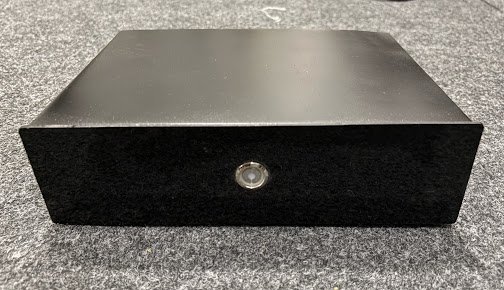
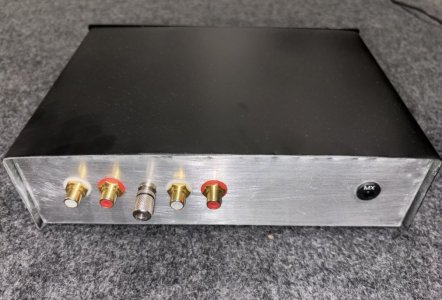
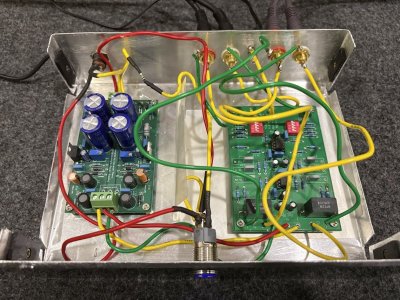
Happy to share my DIY build of the CNC Phono (Thanks to @sachu888 for the supply of the CNC Phono and Power supply kits). Not battery powered though as I went with the DC PS board as suggested by Sachin.

I have been using the inbuild phono on my Marantz AVR but got keen in the CNC phono after reading various threads and my urge for a DIY project so here it is after a month of exploring, shopping and a few hours of labour. To my ears, I can hear a clear improvement in output quality from what I was used to with the Marantz built-in phono which was slightly subdued but CNC opened up quite a bit of details.


IMG_9407.jpg

IMG_9403.jpg

IMG_9381.jpg

IMG_9387.jpg

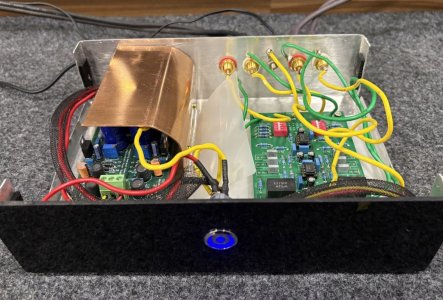
I hear a slight hum/noise if I turn my amp to high volume when the TT is just powered on but not playing. Read somewhere that adding a bronze shielding can help absorb emi and I had a bronze sheet lying around so just mounted it in (seen the the last picture above). It did not really make a difference but I left it in anyways for the effort already spent in mounting it. Sometime later I have to try other suggestions I read around of changing TT placement or rca cables to address the low hum.


For those interested, I ended up building the chassis myself using 1mm aluminium sheet and 3mm acrylic for the front facia. Not the best shape and finish I had hoped for but my ambition was to put the CNC phone boards in something better than a cardboard box. All RCA sockets are from Neutrik brand as they come with the red and white rings which I preferred.

Cheers!
Saravanan
 
Last edited:
@hdmaniac
Nice build—I really appreciate that you went the DIY route with the phono stage. I’m also running a DIY setup myself.

I have a few suggestions that could help take your build to the next level and reduce hum:

I didn’t notice a ground wire on the power supply. Are you using a wall wart? If so, consider switching to a linear power supply—this can significantly lower noise. With a linear supply, you can also tie the ground to the chassis, which often helps eliminate hum issues.

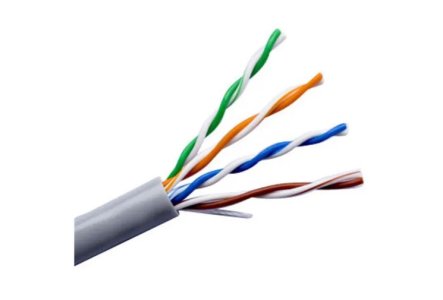
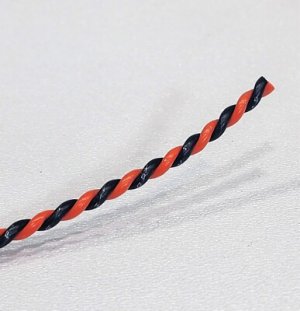
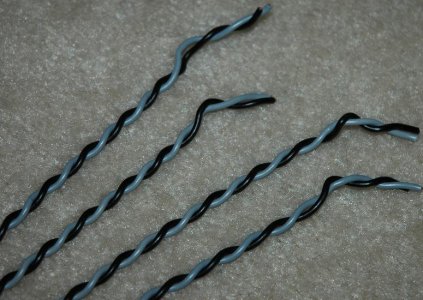
For the RCA input and output wiring, you might want to replace the current cables with thinner wire. CAT5 wire works surprisingly well for this—try braiding the strands together. It tends to have lower capacitance and can improve overall signal quality. Also, keep the wiring as short as possible between the PCB and the RCA sockets to minimise interference.

The thicker wire you’re currently using likely has higher capacitance, which can affect performance, so going thinner and shorter should help clean things up.
 
@hdmaniac
Nice build—I really appreciate that you went the DIY route with the phono stage. I’m also running a DIY setup myself.

I have a few suggestions that could help take your build to the next level and reduce hum:

I didn’t notice a ground wire on the power supply. Are you using a wall wart? If so, consider switching to a linear power supply—this can significantly lower noise. With a linear supply, you can also tie the ground to the chassis, which often helps eliminate hum issues.

For the RCA input and output wiring, you might want to replace the current cables with thinner wire. CAT5 wire works surprisingly well for this—try braiding the strands together. It tends to have lower capacitance and can improve overall signal quality. Also, keep the wiring as short as possible between the PCB and the RCA sockets to minimise interference.

The thicker wire you’re currently using likely has higher capacitance, which can affect performance, so going thinner and shorter should help clean things up.

Thank you for those great suggestions @hifimaddy. I am using a wall wart that outputs 12vac as suggested by Sachin to use with the power supply board. I'll try the wiring suggestions next weekend. If you happen to have a picture of how braided strands look, I can give that a shot as well.

Thanks!
 
Thank you for those great suggestions @hifimaddy. I am using a wall wart that outputs 12vac as suggested by Sachin to use with the power supply board. I'll try the wiring suggestions next weekend. If you happen to have a picture of how braided strands look, I can give that a shot as well.

Thanks!

CAT5 cable is inexpensive and readily available at most network or electronics shops. When using it, make sure to twist each pair of wires as shown in the reference images below—this helps minimise electromagnetic interference. It’s also a good idea to twist or braid the wires from the power supply, as this further reduces noise and magnetic interference.

Could you share a picture or details of your wall wart power supply? Specifically, is it a 2-pin or 3-pin plug?
  • If it’s a 3-pin (grounded) wall wart, grounding is straightforward—you can connect the ground directly to the chassis.
  • If it’s a 2-pin (ungrounded) wall wart, you can run a separate grounding wire from the chassis to a proper ground point. While this may not look as clean, it can still be effective. Alternatively, you could modify the power setup to include a grounded connection.
Proper grounding is essential for reducing hum and improving overall signal quality.

Screenshot 2026-04-20 112618.jpgs-l400.jpg
16AWG-Twisted-Pairs.jpg
 
Wharfedale Linton Heritage Speakers in Walnut finish at a Special Offer Price. BUY now before the price increase.
Back
Top