
Any good references for calculation of Speaker & Amplifier current / Voltage / Power matching ?

Driving a 2-ohm speaker with a 4 or 6-ohm stable amplifier is risky and likely to cause overheating, distortion, or permanent damage to the amplifier due to excess current draw. While it might work at low volumes, the output stage of the amp will struggle to maintain proper output voltage, overheat , the amp's output impedance will limit current or likely enter into the "protect mode". of
Its like a driving a 2-wheeler. like a scooty (unless its an old school Bullet) with more than two riders. Yes, it will run, but the engine would be over heating , control , steep climb & acceleration would be severely limited, the suspension would sag and so on.
 
Last edited:
I have shared some calculations. I hope it will be useful for some.

Simplified definitions:
- Prms is output voltage x output current when amplifier output is a single frequency. Say: 1kHz.
- Pave, as applied to audio application, is ave of output voltages of different frequencies and different amplitudes x ave of output currents of different frequencies and different amplitudes
- Peak power is a measure of an amplifier to handle very large power for a very very small amount of time or an instance of time.
- Kindly note that considerations such as crest factor of 3 used for audio application, signal processing such as compression can skew the interpretation of calculations or the definitions
 

Attachments

Prms is output voltage x output current when amplifier output is a single frequency. Say: 1kHz.

RMS Power vs. Average Power​

Question:​

Should I use units of root mean square (rms) power to specify or describe the ac power associated with my signal, system, or device?

Answer:​

It depends on how you define rms power.

You do not want to calculate the rms value of the ac power waveform. This produces a result that is not physically meaningful.

You do use the rms values of voltage and/or current to calculate average power, which does produce meaningful results.

Pave, as applied to audio application, is ave of output voltages of different frequencies and different amplitudes x ave of output currents of different frequencies and different amplitudes
Within its specs limits, it doesn't matter to an amplifier, whether the input signal is a complex musical piece or a sine wave test signal
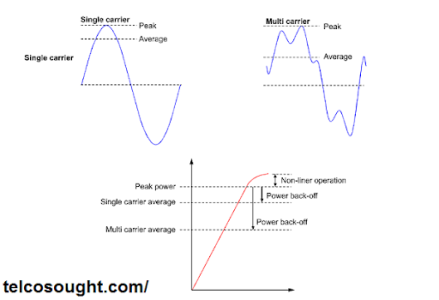
The average power (Pavg) of a sine wave is the time-averaged value of instantaneous power over one full cycle. It represents the constant DC component of AC power, often termed active or real power. For a purely sinusoidal load, it equals half the maximum or peak power

Peak power is a measure of an amplifier to handle very large power for a very very small amount of time or an instance of time.

For a pure sine wave, the Average Power is exactly half of the Peak Power
Attch shows Sine wave vs music signal, pls note that the value of average power is closer to peak power in a sine wave .
That's why during sine wave testing , volume should be kept low

1776859794361.png

For more detailed information, please read the application notes by Rane Audio & Audio Precision
 

Attachments

I have not really read all of this hence maybe someone has covered this

While you can look at it electrically in terms of power and impedances there are a lot of other things also which come into play when you want to drive a speaker with sufficient power

1. Room. the larger the room the more the power needed to pressurize the room. Roughty every 1 m you are away from the speaker you lose 3dB ie you need double the power to get the same SPL. hence a 30W at 3m is equal to 60W power needed at 4m. this is very rough ..more like a thumb-rule ) some say dubling the distance needs 4 tomes the power as well)
2. two speakers rated at 4 ohms can still be very different loads for an amplifier because impedance and phase vary with frequency. Around low frequencies such as 40 Hz, a speaker with a more severe impedance or phase angle may need more current from the amp to achieve the same output
3. the amplifier topology. Constant current, SET, Push pull, Class A .. each of these can mean that the rated 30W can be very different in the real world


Hence you cannot match a speaker and amp by specs. you can shortlist but in the end there are too many factors..and ar better off going with 3-4 times the power if in doubt.
 
for eg.
if a speaker is 4 Ohms then - how much current will it require? Thus how much power? How much peak Power?
Etc.
Speaker dips down to 2 Ohms ? then ?
Any simple physics?
Just like many others pointed out, there is no simple physics. To refrain from sounding like a broken record, I wont go into all that was discussed again. Along with nominal ohm ratings and sensitivity, frequency vs impedance graph and a phase vs frequency graph is super important.
People often look for “stress zones” where, impedance dips low (say 3–4Ω or below) AND phase angle is large (±45° or more). That combination is what makes a speaker “an amp killer”. And then the whole world of amplifier topology and design is there adding to the confusion.

If you provide a particular combination of devices, people may be able to provide some insights.
 
A 2-ohm nominal speaker usually has a minimum impedance around 1.2–2 ohms (venturing into amp killer territory) , with higher values (potentially 5–10+ ohms) at resonance.
If you provide a particular combination of devices, people may be able to provide some insights.

Agree with all your points , but only manufacturing companies can have a dedicated financial resources, staff , measuring devices and listening room to check compatibility between various amplifiers and speakers or someone like Amir from Audio Science Review
IMHO , buying an 8 Ohm version, instead of lower impedance of the same speaker (if there is an option to choose) will ensure compatibility with even vintage amps. For those buying new amps, check if it can support 2 Ohms speakers
 
Lower impedance loads (e.g., 4 Ω and 2 Ω) present a greater electrical demand on an amplifier because, for a given output voltage, they draw higher current. This increased current demand raises the thermal and electrical stress on the amplifier’s output stage and power supply.

If an amplifier is not designed or rated to operate safely at low impedances, connecting a 4 Ω load can lead to several issues:
  • Overheating due to excessive current draw and power dissipation in the output devices
  • Current limiting or clipping, where the amplifier cannot supply the adequate current, resulting in waveform distortion
  • Protection circuit activation or, in worst cases, permanent damage to components
Therefore, it is critical to match the speaker impedance with the amplifier’s specified load range to ensure stable operation and maintain signal fidelity.
 
A 2-ohm nominal speaker usually has a minimum impedance around 1.2–2 ohms (venturing into amp killer territory) , with higher values (potentially 5–10+ ohms) at resonance.


Agree with all your points , but only manufacturing companies can have a dedicated financial resources, staff , measuring devices and listening room to check compatibility between various amplifiers and speakers or someone like Amir from Audio Science Review
IMHO , buying an 8 Ohm version, instead of lower impedance of the same speaker (if there is an option to choose) will ensure compatibility with even vintage amps. For those buying new amps, check if it can support 2 Ohms speakers
Agree. Most modern mainstream design loudspeakers in the market that are in the entry to mid level range usually are designed with decent (benign) frequency vs impedance graph and phase vs frequency graph because they are typically used with entry to mid level integrated amplifiers and sometimes AVRs. So a quick look at the OHM ratings and sensitivity ratings should suffice. Companies are careful with these things. They don't expect a 1.5L loudspeaker to be paired with a 8L power amp with great power supply design.

People with such esoteric tastes are usually more educated about other parameters and they usually do their due diligence.
 
I wanted to get some input from others who may have tried pairing a mid to high-end amplifier with relatively entry-level floorstanding speakers.

I recently connected my Canor Virtus A3 to my Focal Chora 826 and spent some time listening across a few familiar tracks. Surprisingly, I didn’t notice a significant overall improvement in presentation compared to my previous setup. The difference wasn’t as pronounced as I expected given the jump in amplification quality.
That said, I did observe better control in the bass — tighter and more defined — which makes me think the amp is clearly doing something right.

Ofcourse the Chora 826s are a limiting factor here and not resolving enough to fully reflect what the Canor is capable of. I’m currently using standard cables as well, and plan to switch to Furutech once I set up my Amphion Argon 3LX.

Would appreciate insights from anyone who has tried a similar mismatch — mid-high-end amp with more modest speakers. Is it common for the speaker to cap the perceived improvement to this extent?
 
Last edited:
I wanted to get some input from others who may have tried pairing a mid to high-end amplifier with relatively entry-level floorstanding speakers.

I recently connected my Canor Virtus A3 to my Focal Chora 826 and spent some time listening across a few familiar tracks. Surprisingly, I didn’t notice a significant overall improvement in presentation compared to my previous setup. The difference wasn’t as pronounced as I expected given the jump in amplification quality.
That said, I did observe better control in the bass — tighter and more defined — which makes me think the amp is clearly doing something right.

Ofcourse the Chora 826s are a limiting factor here and not resolving enough to fully reflect what the Canor is capable of. I’m currently using standard cables as well, and plan to switch to Furutech once I set up my Amphion Argon 3LX.

Would appreciate insights from anyone who has tried a similar mismatch — high-end amp with more modest speakers. Is it common for the speaker to cap the perceived improvement to this extent?
Perhaps speakers and room acoustics account for 75-80% of the experience. DAC, amplifier,cables, source make up the rest of the experience.
 
Perhaps speakers and room acoustics account for 75-80% of the experience. DAC, amplifier,cables, source make up the rest of the experience.
Yes, makes sense..I changed the amp in the same room where I have had my old setup for 6-7 years.
So was expecting a bigger gain in performance as everything else stayed the same. Thank you for the information tho.:)
 
Last edited:
Order your Rega Turntables & Amplifiers from HiFiMART.com - India's reputed online dealer.
Back
Top