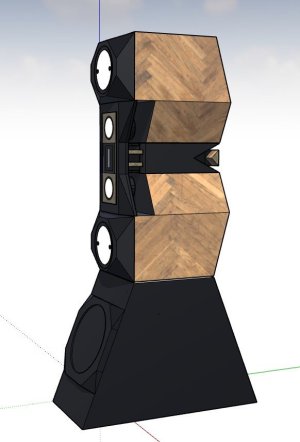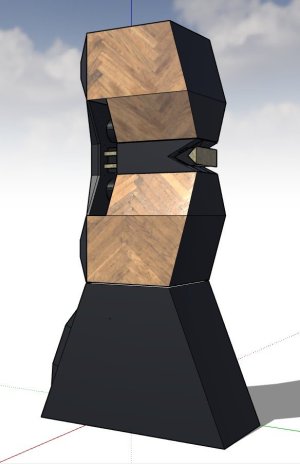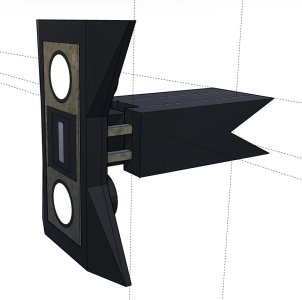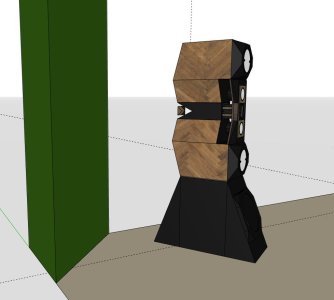
square_wave
Well-Known Member
At the outset, let me say that I am a fan of speakers that come with waveguides or dual concentric drivers. If they dont come with one of those, then the design has to be special enough to get acceptable directivity but are still maximising the benefits of not having a waveguide.The newer constant directivity products like Dutch and Dutch 8C, Kai Audio KII3 with BXT, Earl Geddes's designs and Genelec designs would trump the earlier designs. Only blind A/B testing would confirm subjectively. But then there are polar charts of both the designs already available and its very clear. Times have changed.
Its 2026 and I believe, passive crossovers and non waveguide designs are a thing of past especially for DIYers like us, DSP offers so much and there are plenty of amps and drivers available, no dearth of anything. If one has a budget, one can make a very nice system that commercial designs dont offer.
I agree....Waveguides are a powerful tool, but they are not an absolute requirement for a great loudspeaker. They primarily address dispersion control and off-axis consistency, which is only one part of sound quality. Many world-class manufacturers deliberately choose other priorities and achieve outstanding results without waveguides at all. Companies like Vandersteen Audio focus on time- and phase-coherent designs using low-order crossovers and physical driver alignment; Wilson Audio prioritizes dynamic realism, scale, and mechanical time alignment through modular enclosures; and ATC achieves exceptional accuracy via dedicated midrange drivers, massive motors, and active control rather than radiation shaping. These speakers are globally respected precisely because they excel in tonal realism, dynamics, and musical engagement—demonstrating that waveguides are a design choice, not a prerequisite. In loudspeaker design there is no single “correct” solution, only informed tradeoffs, and history clearly shows that greatness can be achieved through multiple, equally valid paths.
I agree with you that "fully active systems" utilising an active crossover and separate outboard amplification for each driver will outperform a passive crossover type loudspeaker that is driven with just one amplifier. However that increases complexity and cost.
However, most speakers that have these amps inbuilt into the speaker chassis itself and driven by an active crossover sound great but many are easily beaten by systems that use a more traditional approach. They usually have their pros and cons. Very subjective stuff. I personally know someone who bought a costly active genelec to sell it soon and went back to a traditional system.
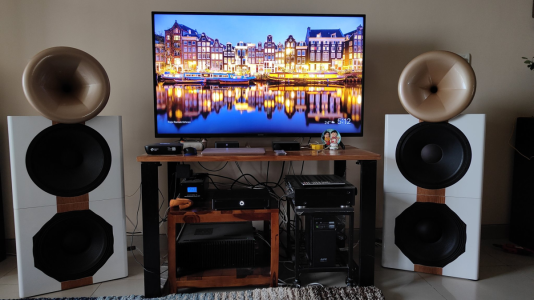
There are of course very high end DIY people who make custom stuff that are really awesome. But those are usually not very commercially feasible.
At the OP, sorry for diverting the topic. Many apologies if this is diverting the thread from your goal.
Last edited:


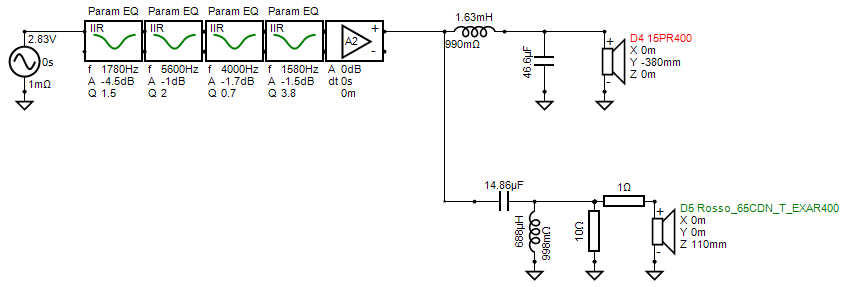
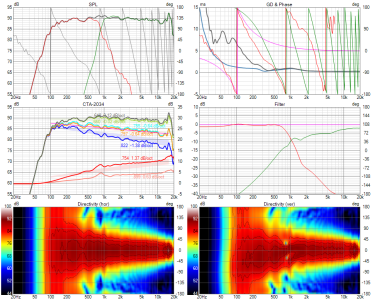


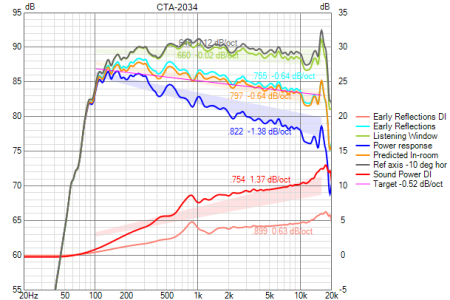
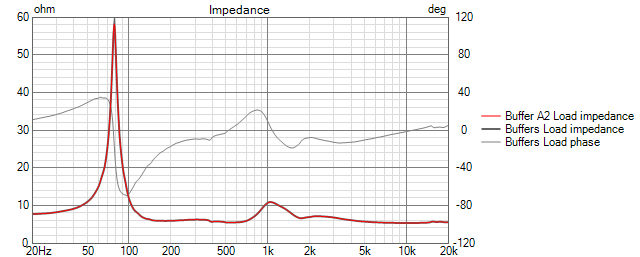

 ! But very good DIY conversations!